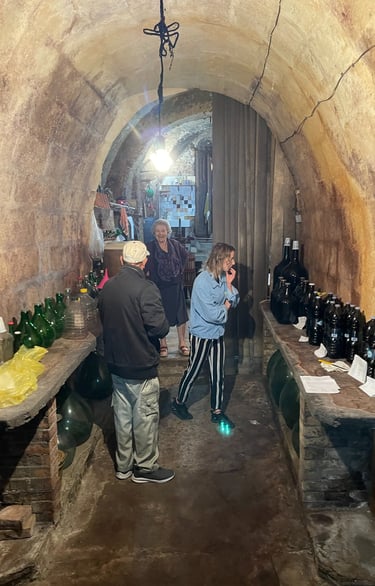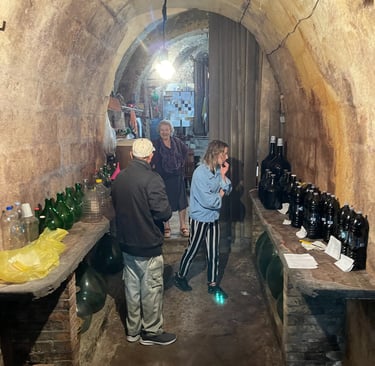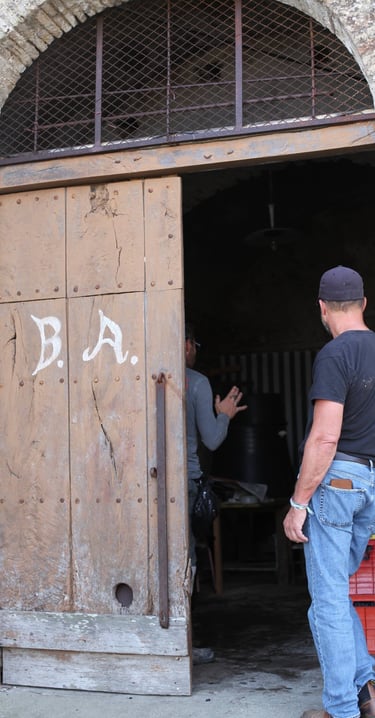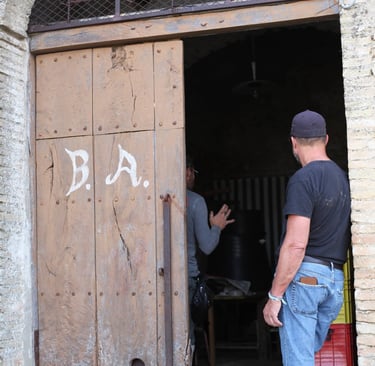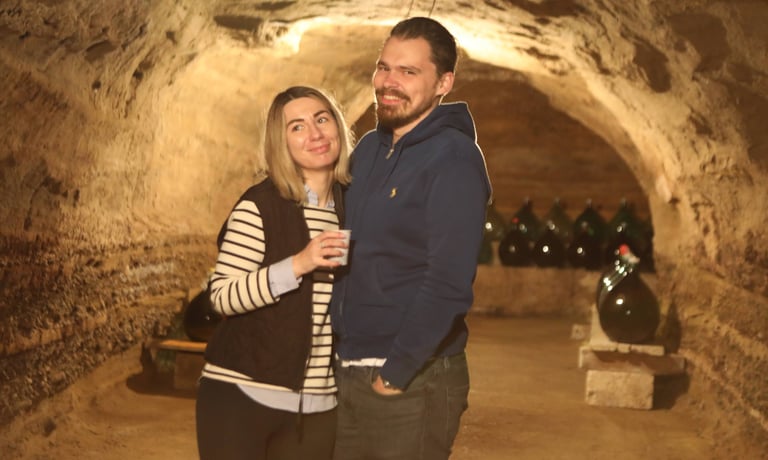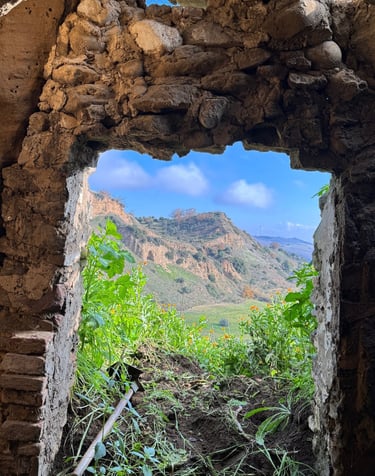
One of the most fascinating aspects of Grottole is what exists beneath it. Throughout the village, hundreds of caves and cantinas are carved directly into rock and earth, tucked beneath homes, streets, and terraces. Their presence is everywhere once you begin to notice them.
Their use has clearly evolved over time. In front of some, you can still see traces of earlier functions — small areas where livestock was once kept. At times, I’ve even wondered whether people may have lived in some of these spaces long ago, as happened in nearby Matera. What remains certain is that their form reflects centuries of adaptation to climate, terrain, and practical necessity.
Historically, cantinas were not living spaces but working ones. They served as environments for making and storing wine, keeping olive oil, housing tools, and storing grains, legumes, and preserved foods prepared during harvest seasons. In earlier periods, animals were sometimes sheltered in these spaces as well, particularly when protection from weather or theft was needed. Their naturally cool and stable temperatures made them invaluable long before refrigeration or modern storage systems existed.
These spaces were deeply tied to the agricultural rhythms of village life. During harvest periods, cantinas became active zones of production — grapes processed into wine, oil stored, provisions organized for the winter months ahead. They extended the functional life of the home beyond the living areas above or nearby. Even today, they remain ancillary to the home and quietly integral to the lifestyle.
I once heard from an older local that, years ago, some cantinas occasionally took on a different role. Friends would gather inside for simple dinners, sharing food, drinking wine, and singing traditional folk songs late into the evening. Since hearing that story, I’ve often imagined what those nights must have felt like — and have quietly hoped to one day host one of these dinners myself, if only to experience a small piece of that atmosphere.
It is important to be clear about what these spaces are — and what they are not. Cantinas and caves were never designed as modern residences. They lack natural light, ventilation, and the conditions required for comfortable long-term habitation. Their value lies in their role as places of work, storage, and making rather than living.
That said, it is hard not to see their potential for thoughtful contemporary uses. It is easy to picture them as workshops, artist studios, or intimate gathering spaces such as wine bars or small cafés — though the legal and practical considerations for such transformations are not always simple. Still, the possibility of a beautiful new life for these spaces is difficult to ignore.
Today, many cantinas sit unused as daily routines have changed. Yet they remain one of Grottole’s most distinctive and underappreciated assets. Their qualities — separation, quiet, thermal stability, and remarkable durability — lend themselves naturally to certain modern functions when approached with respect for their original purpose.
Appropriate contemporary uses might include small-scale wine production and aging, food storage and fermentation, workshops for craft or repair, artist studios, writing or research spaces, or simply environments for focused, uninterrupted work. In many ways, such uses mirror the historical logic of the cantina: productive, supportive, and deeply connected to the rhythms of life above.